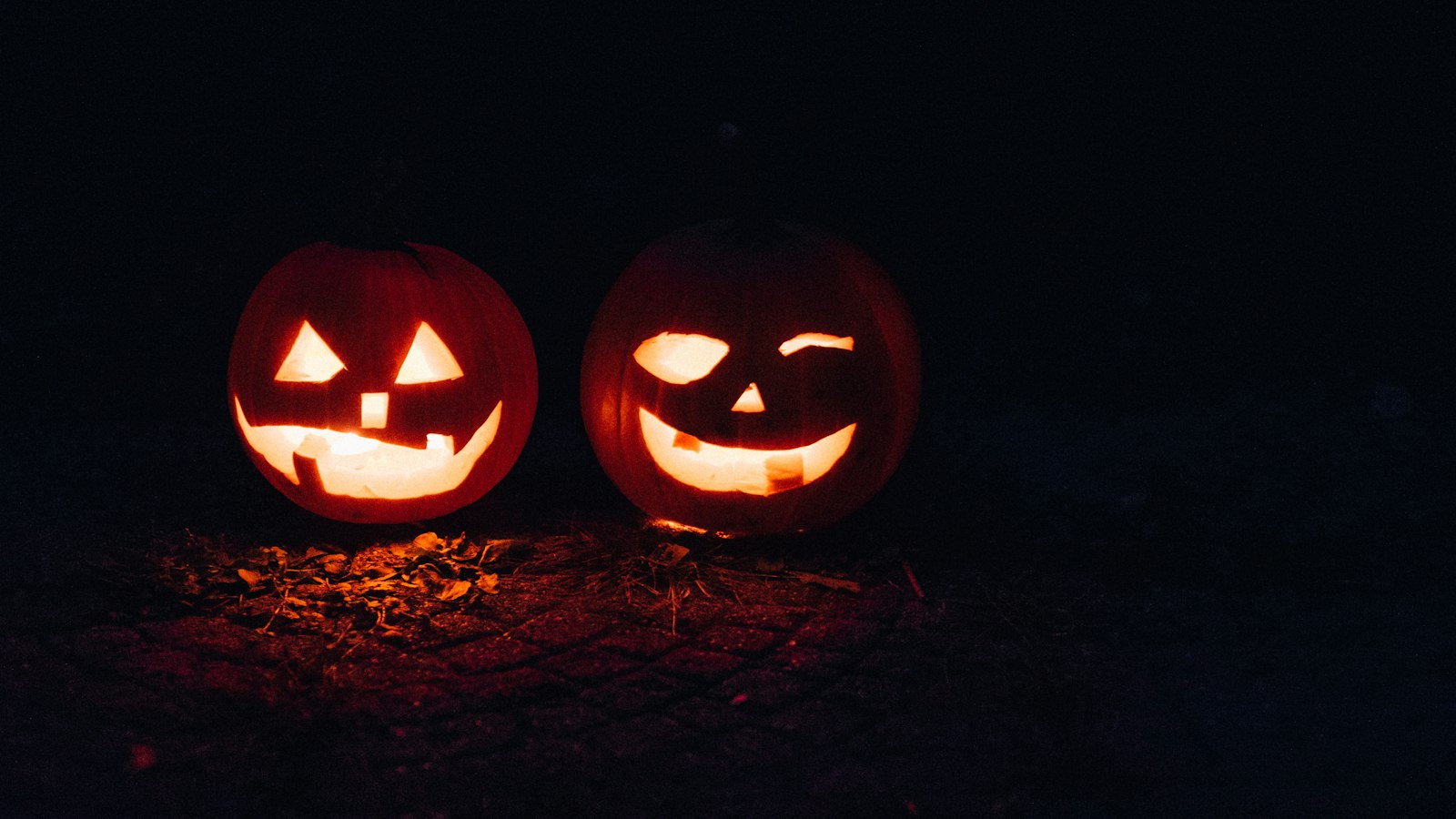
A Halloween email campaign is a short, themed series of emails sent in the one to two weeks before 31 October, using a seasonal hook to drive a sale, a content engagement or a product action.
It is also the best low-risk rehearsal you have for Black Friday. The stakes are lower, the audience is receptive to playfulness, and you can test things that would be uncomfortable to change in late November.
The mistake is treating Halloween as a costume joke. The brands that benefit use it to learn: which subject lines work, which segments respond, and whether the sending setup holds up.
What you will learn:
- Halloween email campaign ideas for ecommerce, SaaS and service businesses
- Subject line patterns, with examples you can adapt
- A send-timing plan for the 2026 calendar
- How to use Halloween as a Black Friday test
- Two worked examples with the arithmetic
- The mistakes that damage deliverability
The Short Version
- Pick one clear idea and build two or three emails around it, not ten.
- Make the theme serve the offer; do not let it bury the call to action.
- Send the main email 7 to 10 days before Halloween, with a short last-chance reminder.
- Use Halloween to test subject lines, segments and send times.
- Keep complaint rates below 0.10% and never reach 0.30%.
Direct answer: the best Halloween email campaigns are short, honest and built around one clear offer or idea, sent two or three times across the week or two before 31 October, with the results used to prepare for Black Friday.
Why Halloween Is Worth Emailing
What Halloween Gives You That Other Occasions Do Not
Halloween is relatively uncluttered compared with Black Friday. Inbox competition is lower, subscribers are used to playful tone, and there is a fixed date that creates natural urgency without invented deadlines.
It is also early enough to be a rehearsal. You can try a new template, a new segmentation rule or a new send time, and read the results before the high-volume period begins.
What It Does Not Give You
Do not expect Halloween to be a major revenue event for every business. For many service and software companies it is mostly a brand and engagement moment. Set your expectation accordingly, and judge it on what you learn as well as what you sell.
Halloween Email Campaign Ideas by Business Type
Ecommerce
Ecommerce has the clearest fit, because customers are buying costumes, decorations, sweets, party items and seasonal products.
- The countdown sale. A three-email series with a fixed end date and a simple offer.
- The costume or theme guide. A curated collection organised by audience: families, couples, pets.
- The mystery offer. A reveal-on-click discount or surprise gift with purchase. Be clear about the minimum value.
- Last-minute rescue. A late send for fast-delivery or local-pickup items, aimed at people who left it late.
- Post-Halloween clearance. Sent on 1 November, aimed at stock that will not carry to the next season.
SaaS and Software
For software, the theme should frame a useful message.
- The scary-metrics audit. An email on the "frightening" problems in a workflow, such as unused licences or broken reports, with a checklist.
- Spooky bugs fixed. A product update recast as vanquishing bugs. Light on theme, heavy on facts.
- The template pack. A free download offered as a treat.
- A themed webinar or live Q&A. Seasonal framing, practical content.
- A trick-or-treat feature unlock. A time-limited trial of a premium feature.
Service Businesses and Agencies
- The "horror story" case study. A before-and-after on a problem you fixed.
- A free audit. Framed as checking for what is hiding in the account or site.
- A seasonal booking offer. Early bookings for November and December.
Nonprofits and Community Brands
- A themed fundraising appeal tied to a real campaign with a clear impact statement.
- A community event invitation for local families.
Subject Lines for Halloween Emails
What Makes a Halloween Subject Line Work
A good one does three things: signals the theme, says what is inside, and gives a reason to open. The theme should add colour, not hide the point.
Avoid misleading phrasing. A subject promising a "scary" 50% off that is actually 15% will generate complaints, and complaints cost you more than opens earn.
Subject Line Patterns With Examples
| Pattern |
Example |
Best for |
| Countdown |
"3 days left: our Halloween offer ends Friday" |
Retail |
| Pun with clarity |
"Fang-tastic deals on costumes, inside" |
Consumer brands |
| Question |
"Still looking for a costume?" |
Late-send reminders |
| Curiosity |
"The one thing hiding in your inbox" |
Engagement |
| Utility |
"Free Halloween template pack for your next email" |
SaaS, B2B |
| Reveal |
"Your mystery offer is ready to open" |
Ecommerce |
Check length and tone with the email subject line character counter and the subject line analyzer. For wider pattern guidance see email subject line length.
Preheaders
Use the preheader to finish the thought. If the subject is a pun, the preheader should state the benefit. The email preheader generator can help.
Send Timing for the 2026 Calendar
Halloween 2026 falls on Saturday 31 October. That shapes the plan, since weekend shopping behaviour and weekend B2B inbox habits differ.
| Date |
Day |
Send |
Audience |
| 22 October |
Thursday |
Teaser or content (optional) |
Engaged |
| 26 October |
Monday |
Main launch |
All eligible |
| 28 October |
Wednesday |
Reminder |
Non-clickers and non-buyers |
| 30 October |
Friday |
Last chance, shipping or pickup note |
Non-buyers, engaged |
| 1 November |
Sunday |
Clearance or thank-you (optional) |
Buyers excluded as appropriate |
For B2B lists, move the main send to a weekday morning in your recipients' time zone and skip the weekend entirely. The email send time optimizer and the timezone send optimizer can help you check the timing, and email send time optimisation explains the method.
How to Build a Halloween Email, Step by Step
- Choose one objective. Sales, signups, trials or engagement. Not all four.
- Pick one idea. A countdown, a guide, a mystery offer.
- Segment the audience. Buyers, engaged non-buyers, lapsing subscribers.
- Write three emails at once. Launch, reminder, last chance. Write the reminder as new information, not a copy.
- Design for light and dark mode. Seasonal palettes often use black and orange, which is a classic dark mode risk. See dark mode email design.
- Keep it light. Heavy graphics can push a message past Gmail's clipping threshold; see Gmail clipping.
- Add alt text to themed images so the message works with images off.
- Test and send. Preview on mobile, check links and confirm unsubscribe works.
Worked Example 1: Comparing Two Subject Lines
A retailer with 40,000 engaged subscribers tests two subject lines on a 20% split, 4,000 recipients per variant, then sends the winner to the remaining 32,000.
| Metric |
Variant A (pun) |
Variant B (countdown) |
| Delivered |
4,000 |
4,000 |
| Clicks |
84 |
116 |
| Click rate |
2.10% |
2.90% |
Check the arithmetic: 84 / 4,000 = 2.1%, and 116 / 4,000 = 2.9%.
Variant B has a 38% relative lift (2.9 / 2.1 = 1.381). Applied to the remaining 32,000 recipients, B would be expected to generate about 928 clicks (32,000 x 0.029) against 672 for A (32,000 x 0.021), roughly 256 more.
Note two cautions. First, 4,000 per variant is a modest sample, so a gap this size is suggestive rather than proof. Check significance with the email A/B test calculator. Second, use clicks rather than opens as the winner metric, because Apple Mail Privacy Protection inflates opens; see Apple MPP and open rates. The figures here are illustrative.
Worked Example 2: Estimating Campaign Revenue
A store plans a three-email Halloween series to 30,000 delivered recipients per send. Assumptions, all illustrative:
- Click rate per send: 2.5%
- Click-to-order conversion: 4%
- Average order value: 38
Per send:
- Clicks: 30,000 x 0.025 = 750
- Orders: 750 x 0.04 = 30
- Revenue: 30 x 38 = 1,140
Across three sends, assuming each send reaches the same audience at similar rates: 3 x 1,140 = 3,420. In practice reminders sent to non-buyers usually perform below the launch, so treat that as an upper bound.
Suppose the series costs 600 in platform fees, design and a small prize. Net contribution is 3,420 - 600 = 2,820, before cost of goods. Run your own figures through the email campaign ROI calculator or the email revenue per campaign calculator.
Using Halloween as a Black Friday Rehearsal
This is where Halloween earns its place in the calendar.
| What to test |
Why it matters in November |
| Send time |
Find which slot your list responds to |
| Segment response |
See whether engaged and lapsing groups behave differently |
| Subject line style |
Learn whether urgency or curiosity wins |
| Template rendering |
Catch dark mode and clipping issues early |
| Complaint rate at higher frequency |
Judge how much frequency the list tolerates |
| Automation triggers |
Confirm cart and browse flows fire correctly |
Record the results and carry them into your Black Friday email sequence and your holiday email sending schedule.
Common Halloween Email Mistakes
Letting the Theme Bury the Offer
If readers must decode the pun to find the point, they will not. State the offer plainly.
Discounting Too Deeply
A Halloween offer that matches Black Friday invites subscribers to wait. Keep it modest or use non-price incentives.
Writing Three Identical Emails
Reminders need new information: a deadline, a new product, a shipping cut-off. Copies feel like spam.
Using Black and Orange Without Testing Dark Mode
Dark artwork on transparent backgrounds disappears under auto-darkening. Test it.
Emailing the Whole List the Same Way
Send reminders only to people who have not acted. It keeps complaints lower and respects attention.
Misleading Subject Lines
"Trick" subjects that deliver nothing might win an open but lose the subscriber. Honesty is a deliverability policy.
Halloween is cheapest when you treat it as a test: every send is a small experiment you will be glad to have run by the time Black Friday arrives.
Key Takeaways
- Build one idea into two or three emails rather than a sprawling series.
- Let the theme support the offer; state the offer clearly.
- Send the main email 7 to 10 days before 31 October, with reminders to non-responders only.
- Judge subject line tests on clicks, not machine-inflated opens.
- Use Halloween to test timing, segments, templates and frequency for Black Friday.
- Keep complaints under 0.10% and never reach 0.30%.
Sources and Further Reading
Related Articles
Related tools: Sharpen your subject with the subject line analyzer, compare variants with the email A/B test calculator, and estimate return with the email ROI calculator.
This article provides general guidance. Results vary by list, offer and sender reputation, and figures in worked examples are illustrative. Check mailbox provider requirements and local marketing law before sending.